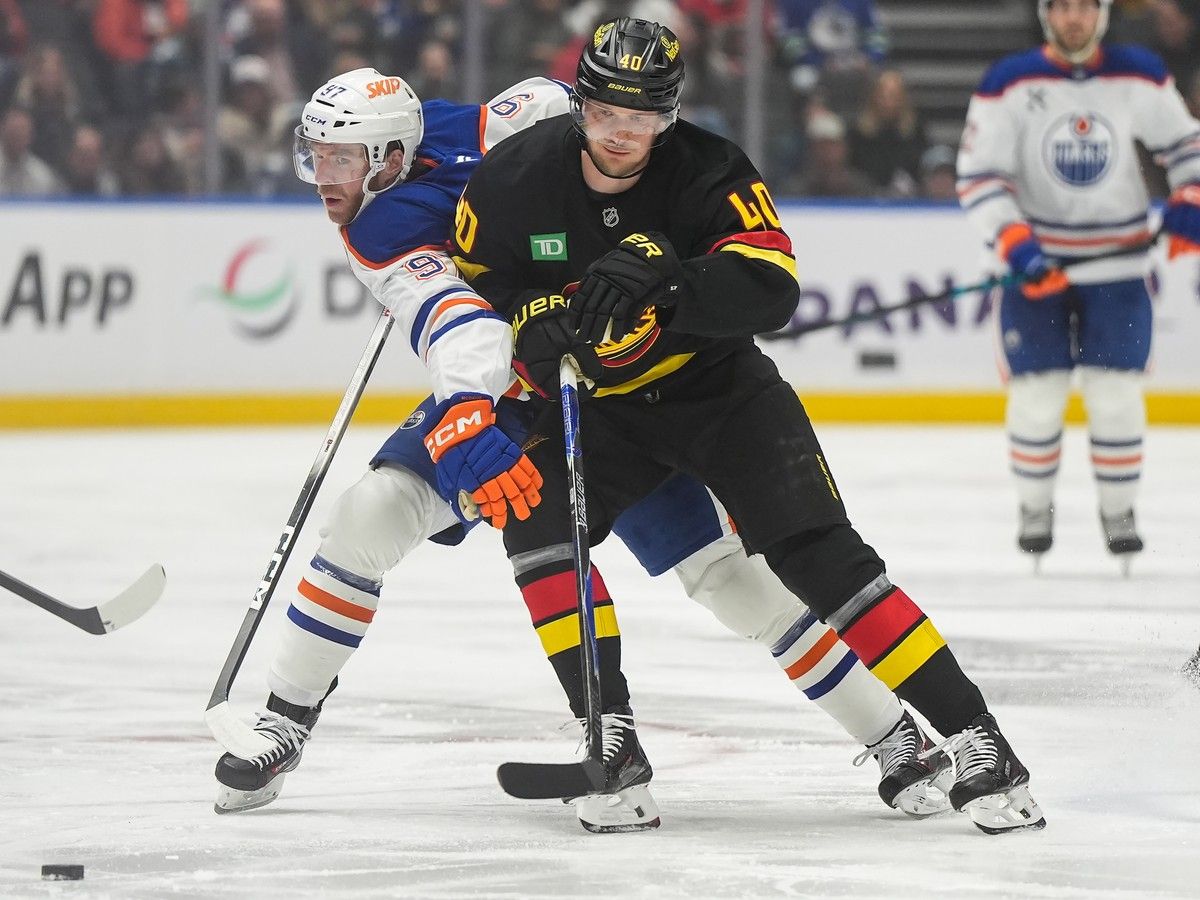
Can Tyler Myers Revive His Game with the Dallas Stars? A Strategic Acquisition
The Dallas Stars have made a significant move to bolster their blue line, acquiring veteran defenseman Tyler Myers from the Vancouver Canucks. This trade, which saw Dallas send a 2027 second-round pick and a 2029 fourth-rounder to Vancouver, wasn't just about adding a body; it was a calculated response to a division rival's activity and a strategic play to address a critical need before the NHL trade deadline. With Vancouver retaining half of Myers' salary, the Stars secure him at a highly manageable $1.5 million cap hit for the remainder of this season and next, positioning him as an affordable asset for two potential playoff runs.
At 34 years old and in his 15th NHL season, the 6-foot-6 right-handed shot brings a wealth of experience and a unique skill set to a Dallas squad aiming for deep postseason success. While Myers has had a challenging season in Vancouver, the context of his struggles and the specific needs of the Stars suggest this move could be a prime opportunity for the towering defenseman to rediscover his top form.
The Stars' Urgent Need for a Right-Shot Blueliner
For some time, the Dallas Stars have been searching for stability on their right side defense. Despite earlier acquisitions like Chris Tanev and Cody Ceci, a significant void remained. Nils Lundkvist, while showing flashes of improvement and gaining some trust with the coaching staff alongside Thomas Harley on the second pair, has historically been inconsistent, particularly under playoff pressure. His undersized frame and occasional defensive lapses have always made him a potential liability in the high-stakes environment of the postseason.
Beyond Lundkvist, the Stars' right-side options were undeniably thin. Players like Ilya Lyubushkin and Alex Petrovic are considered marginal depth pieces, not reliable enough to consistently handle top-four minutes for a contending team. This created an obvious and pressing need for a robust, right-shot presence who could provide dependable minutes.
Adding to the complexity, Dallas had already expended significant premium trade chips in previous transactions, notably the Mikko Rantanen trade, which cost them their 2026 and 2028 first-round picks. Furthermore, with injuries to key forwards like Tyler Seguin and several offseason departures (including Mikael Granlund, Mason Marchment, and Evgenii Dadonov), the Stars needed to preserve assets for potential forward upgrades. This meant blowing their remaining capital on a "big-name" top-four defenseman simply wasn't feasible. The acquisition of defenseman Tyler Myers perfectly aligns with these financial and asset management constraints, offering a significant upgrade at an affordable acquisition cost. For a deeper dive into how this acquisition strategically addresses a critical defensive gap, read our analysis on Dallas Stars Acquire Tyler Myers: Filling a Crucial Defensive Gap.
Tyler Myers: Unpacking the "Big Easy's" Profile and Recent Challenges
Known affectionately in some circles as "The Big Easy," defenseman Tyler Myers is an imposing figure on the ice. Standing 6-foot-6, he combines this immense physical presence with surprisingly above-average skating speed for his size. This unique blend of attributes makes him a rangy defender, capable of covering a lot of ice with his enormous wingspan.
At his best, Myers is a sturdy in-zone defender who thrives on physicality. He wins battles along the boards, effectively stops cycles down low, blocks shots, and uses his frame to box players out in front of the net. He brings a much-needed physical edge that can be invaluable in the grind of playoff hockey.
However, Myers is far from a flawless player. His game has areas that can be exploited, most notably his decision-making with the puck, especially during zone exits. Under heavy forecheck pressure, he can struggle to navigate the puck cleanly, leading to turnovers if forced into a high volume of breakout passes. He also has a tendency to be overaggressive at times, which can result in penalties.
His recent struggles in Vancouver, where his underlying numbers have been rough, must be viewed through a specific lens. The Canucks have been described as an "absolute tire fire" with a notable lack of structure and stability, particularly on defense. In such an environment, even elite players like Quinn Hughes saw their defensive metrics dip. Myers, who was a serviceable second-pair contributor in the two seasons prior, was likely a casualty of this chaotic environment. To dismiss him as "washed up" based solely on recent analytics would be a misjudgment of his capabilities, especially given the environmental factors at play.
The Dallas System: A Perfect Launchpad for a Bounce-Back?
The transition to the Dallas Stars presents a compelling opportunity for defenseman Tyler Myers to revive his game. Unlike the "tire fire" in Vancouver, Dallas operates with a highly structured and disciplined defensive system under their coaching staff. This stability and clear defensive mandate could be precisely what Myers needs to simplify his game and play to his strengths.
In Dallas, Myers won't be expected to be a top-pair cornerstone. His role will likely be as a solid No. 4 or No. 5 defenseman, which aligns better with his current capabilities and minimizes the pressure on his puck-moving deficiencies. Playing alongside a competent partner like Thomas Harley, or anchoring a third pair, could allow Myers to focus on his strong points: his physicality, reach, shot-blocking, and net-front presence.
One of the most appealing aspects of Myers' game, particularly for the playoffs, is his physicality. In the postseason, officiating tends to be more lenient, allowing players to get away with more clutching and grabbing. This shift in enforcement could benefit Myers, enabling him to deploy his physical edge more effectively without constantly being in the penalty box. His ability to stop cycles and clear traffic from the net front will be critical against heavy forechecking teams in the playoffs.
Furthermore, a structured system can help mitigate his decision-making issues on zone exits. By providing clear passing lanes and support, the Stars can reduce the volume of high-pressure breakout passes Myers is forced to make, allowing him to opt for simpler, safer plays. This strategic fit makes the acquisition a smart play for the Stars, reinforcing their blue line with a player who, in the right context, can still be a valuable asset. For more on the strategic genius behind this move, explore Dallas Stars' Smart Play: Tyler Myers Fills Right-Side Need.
Strategic Utilization and Future Outlook for Myers in Dallas
The Dallas Stars have several deployment options for defenseman Tyler Myers. If Nils Lundkvist continues to show inconsistency or falters under playoff pressure, Myers is a competent candidate to step into the second pair alongside Thomas Harley. This pairing would provide a blend of Harley's offensive acumen and puck-moving ability with Myers' defensive reliability and physical presence. Alternatively, Myers could anchor the third pairing, providing a veteran presence and solidifying defensive depth, allowing the coaching staff to roll three dependable defensive pairs.
His presence immediately provides crucial insurance and flexibility for the Stars' blue line. It takes pressure off Lundkvist, allowing him to develop at his own pace without the burden of being the undisputed right-side option. It also means the Stars are better equipped to handle injuries or inconsistent play from other defensemen. His $1.5 million cap hit for two potential playoff runs is an outstanding value for a player of his experience and physical attributes, especially in a cap-strapped league.
The success of this trade hinges on Myers embracing his role within the Stars' structured system and focusing on his defensive strengths. If he can maintain a steady defensive presence, limit high-risk turnovers, leverage his physicality effectively, and contribute to penalty killing, he will be an invaluable asset. His presence also frees up financial and draft capital, potentially allowing Dallas to pursue one or two top-nine forwards before the deadline, further solidifying their lineup for a championship push.
Conclusion
The acquisition of defenseman Tyler Myers represents a shrewd, low-cost, high-upside gamble for the Dallas Stars. He fills an obvious and urgent need for a right-shot defenseman, provides critical depth and physicality, and comes at an incredibly affordable price point. While his recent performance in Vancouver has raised questions, the contextual factors and the structured environment of Dallas offer a compelling narrative for a significant bounce-back.
If Myers can adapt to the Stars' system and channel his physical attributes effectively, he could very well be the missing piece on the blue line that helps propel Dallas deep into the playoffs. This strategic move could transform a struggling veteran into a vital contributor, proving that sometimes, a change of scenery and a clear role are all a seasoned player needs to revive his game.